I distinctly remember reading someone angrily declare “Having travelled a lot is not a personality characteristic” in an online dating profile once. My guess was that she was trying to point out how privileged you have to be to be able to travel — after all, you need health, money, and time to do it, and that about covers 95% of what we might call “resources”. To me though, whether someone has travelled a lot has always been a sufficient (if not necessary) proxy for their openness, spontaneity, energy level, and resourcefulness (all qualities I value very highly), or alternatively, meticulousness in planning and execution. Things can and do go wrong on trips, and presumably if one has travelled a lot — and survived — it stands to reason that they are either (a) good at thinking on their feet and altering their plans, or (b) good at planning contingencies that work and following through. Both are valid exception handling strategies.
I am very decidedly the former — in fact, one of the main reasons why I like bikepacking so much and why it makes me feel so alive is because the risk / reward calculus for spontaneity and exploration is much more favourable for bikepacking than any other form of travel: you’re not on a schedule except your own; you can go on roads that cars cannot; you interact with people in ways that are very different from touring by car (mostly related to high-openness signalling); and most importantly, when something goes wrong, you can usually fix it yourself. And things do often go wrong for me because I’m so bad at planning and following through.
Day 0: The tale of 4 flight reschedules and the missing rear hub spacer
I badly needed a context change (or as other people might say, “a change of scenery”) last week, and knowing that I don’t have that much time to travel normally before I go on my tour, I decided to jet off somewhere — since I’d be flying using miles anyway, last minute tickets wouldn’t be too expensive. I initially asked Intelligent Crazy People (yes, the name sounds obnoxious, but it’s a Facebook group / website for “high-potentials”) if anyone anywhere in the world would host me for a few days and show me around, but since there were no takers (still looking if anyone’s bored!), I opted to go bikepacking for a few days with my old roommate from Princeton who lives in Seattle.
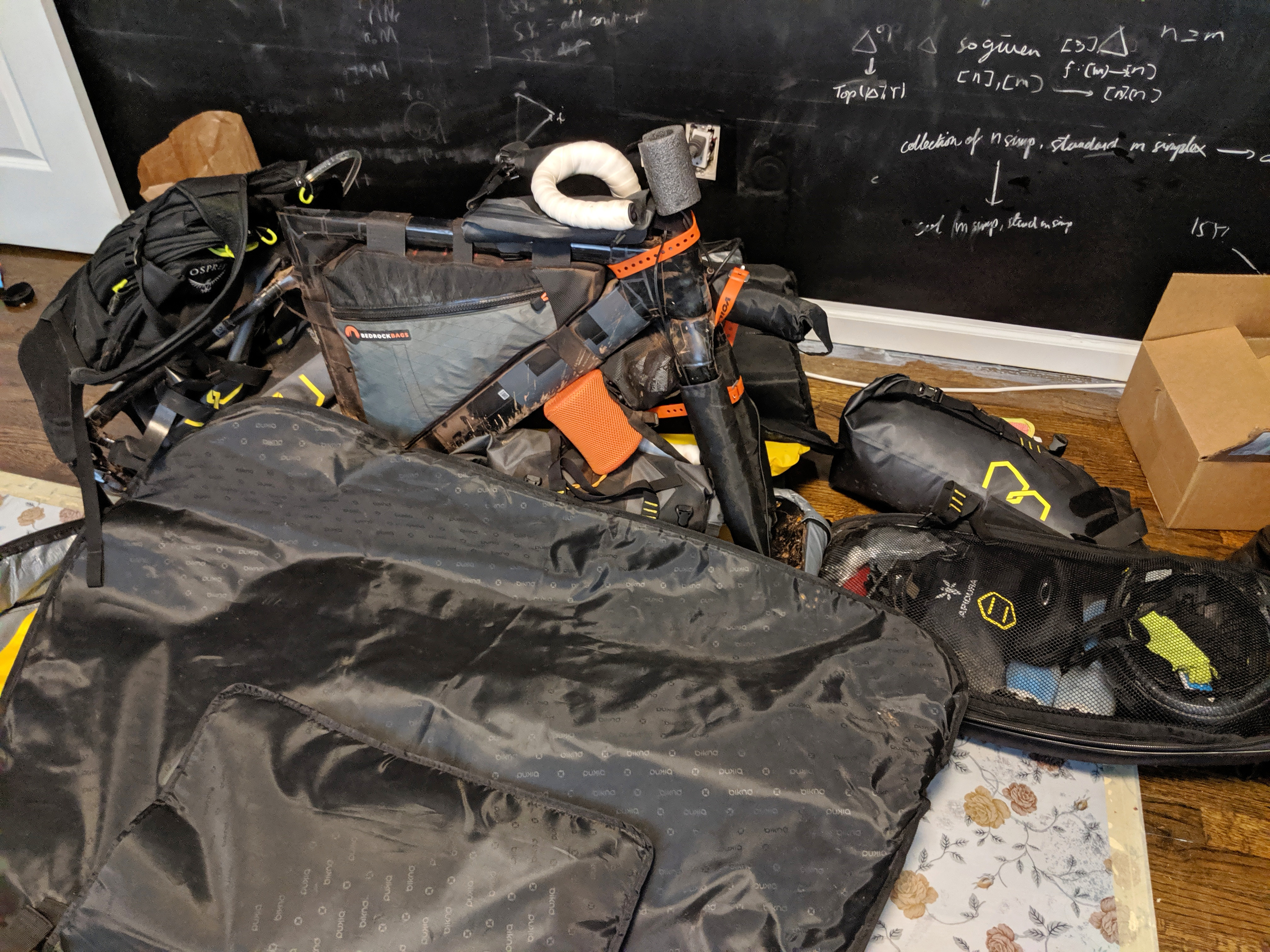
If you’ve ever wondered how you fly with a bike, this is one way to do it.
So, last minute ticket booked, border collie dropped off at a dog daycare, and bike packed in a bike bag, I set off to the airport with what I thought was more than enough time. Unfortunately, American airports can be really bad with lines, and the check-in queues tend to not be clearly marked. The end effect is, predictably, an utter chaos where nobody knows where the line begins and ends — the sort of thing that Germans and the Japanese have nightmares about. And to exacerbate the matter, the people who use the self-check-in kiosks at airports in 2019 are in some part self-selected for their technical ineptitude — obviously they might have needed to check baggage like I needed to, but I saw a lot more people who only had carry-ons who apparently didn’t know how to check-in online.
By the time I found and got in a line, I was already cutting it fairly close to the bag dropoff time. But then the three groups right in front of me all took 30 minutes each checking in for some inexplicable reason, I missed the bag dropoff, and had to get rescheduled on the next flight, through Washington DC and then through to Seattle. Unfortunately, that flight got delayed, so I ended up having to take the next flight out in the morning at 6:55AM. United booked me a hotel in Newark and I went to stay there for the night, but naturally, I magically woke up, walked to my phone, silenced my alarms, and went back to sleep during the night, so I woke up at 7. Fortunately, United re-booked me to a later flight without charging a fee even though I was a no-show. On the other hand, however, they had flown my bike to Washington DC without me (on the wrong flight, no less). In theory, it would be waiting for me in Seattle when I got there. When I landed in San Francisco for the connecting flight, I found out that my flight to Seattle was also delayed. I changed to a flight that was set to leave in 15 minutes, ran to the gate, and successfully got to Seattle after 4 flight changes.
(Side note: This is by far not my weirdest travel story — that would be the time that Kenya Airways decided to go on a strike while I was flying from Bangkok to Nairobi to volunteer as an optometrist in Malawi, but that’s an episode for another time.)
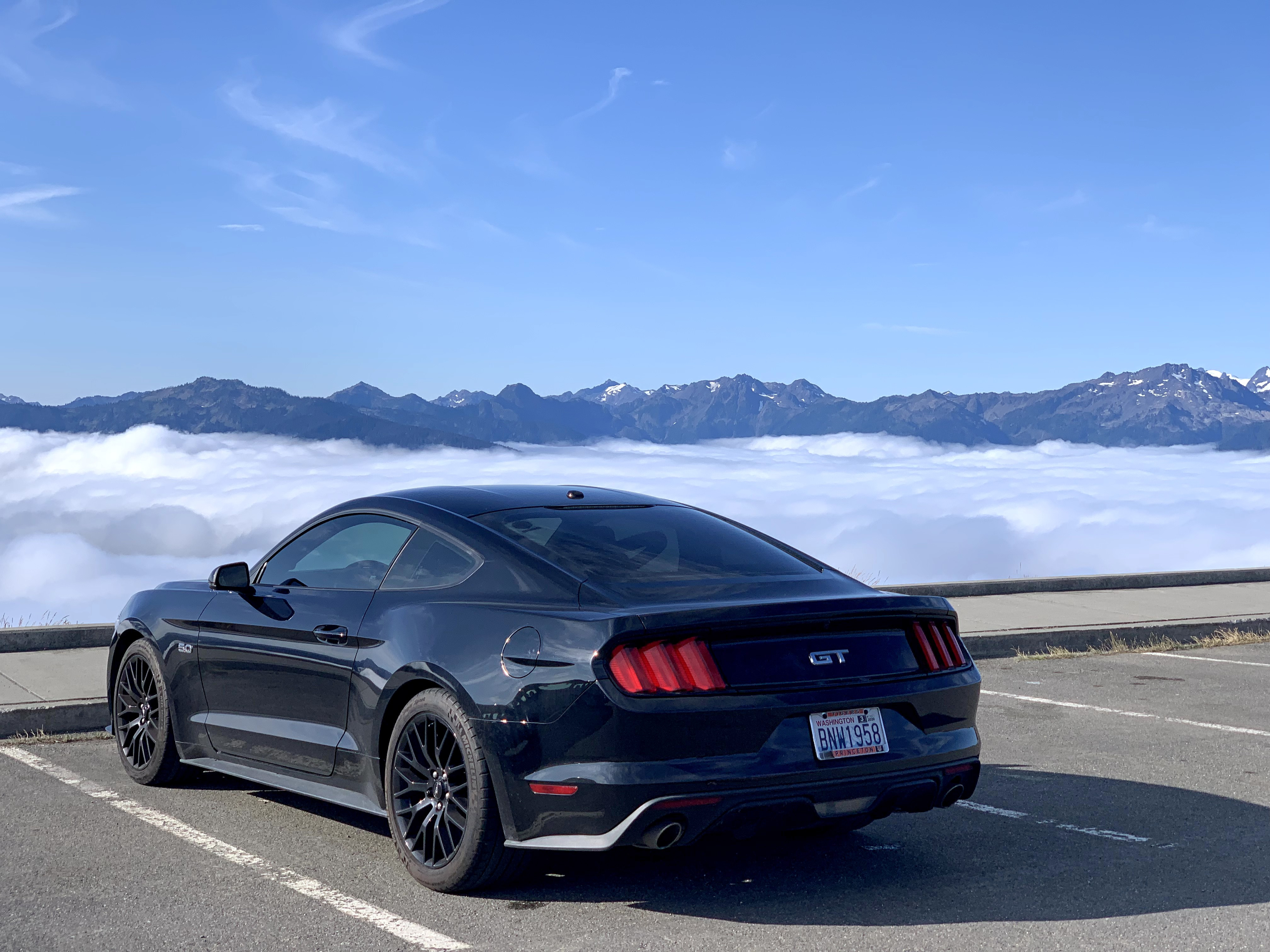
I breathed a huge sigh of relief as I saw my bike bag at the airport. That bag had $9,000 worth of bicycle and camping equipment in it, so losing it would have been quite catastrophic. I got to my old roommate’s place — because of all the delays, I needed to unpack really quickly so that we could get on the next ferry that would take us to Olympic Peninsula, where we were headed. I unpacked my bike in a hurry, threw it in his Mustang GT, and we managed to get to the ferry with some time to spare.
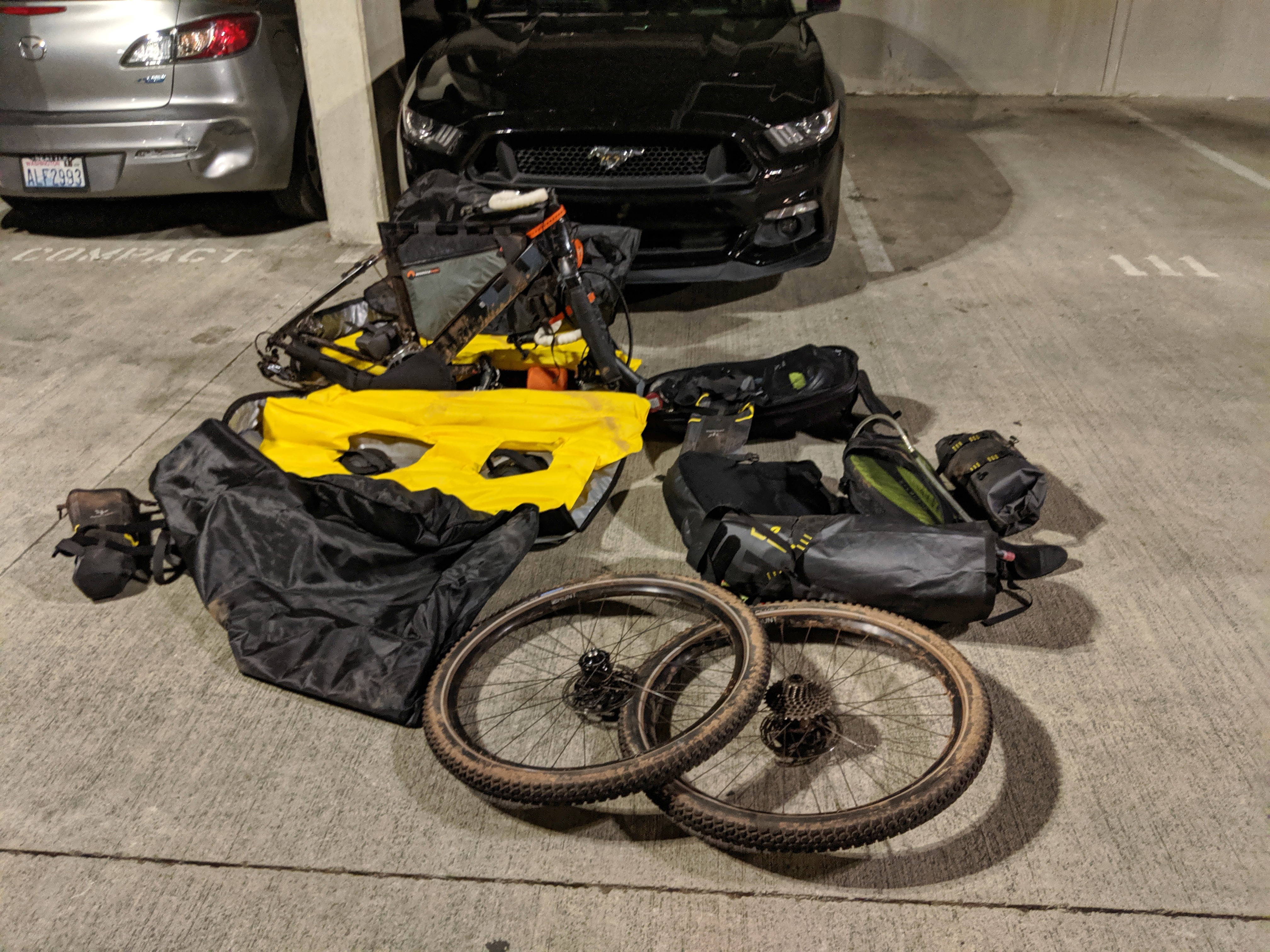
Unpacking in an underground parking lot
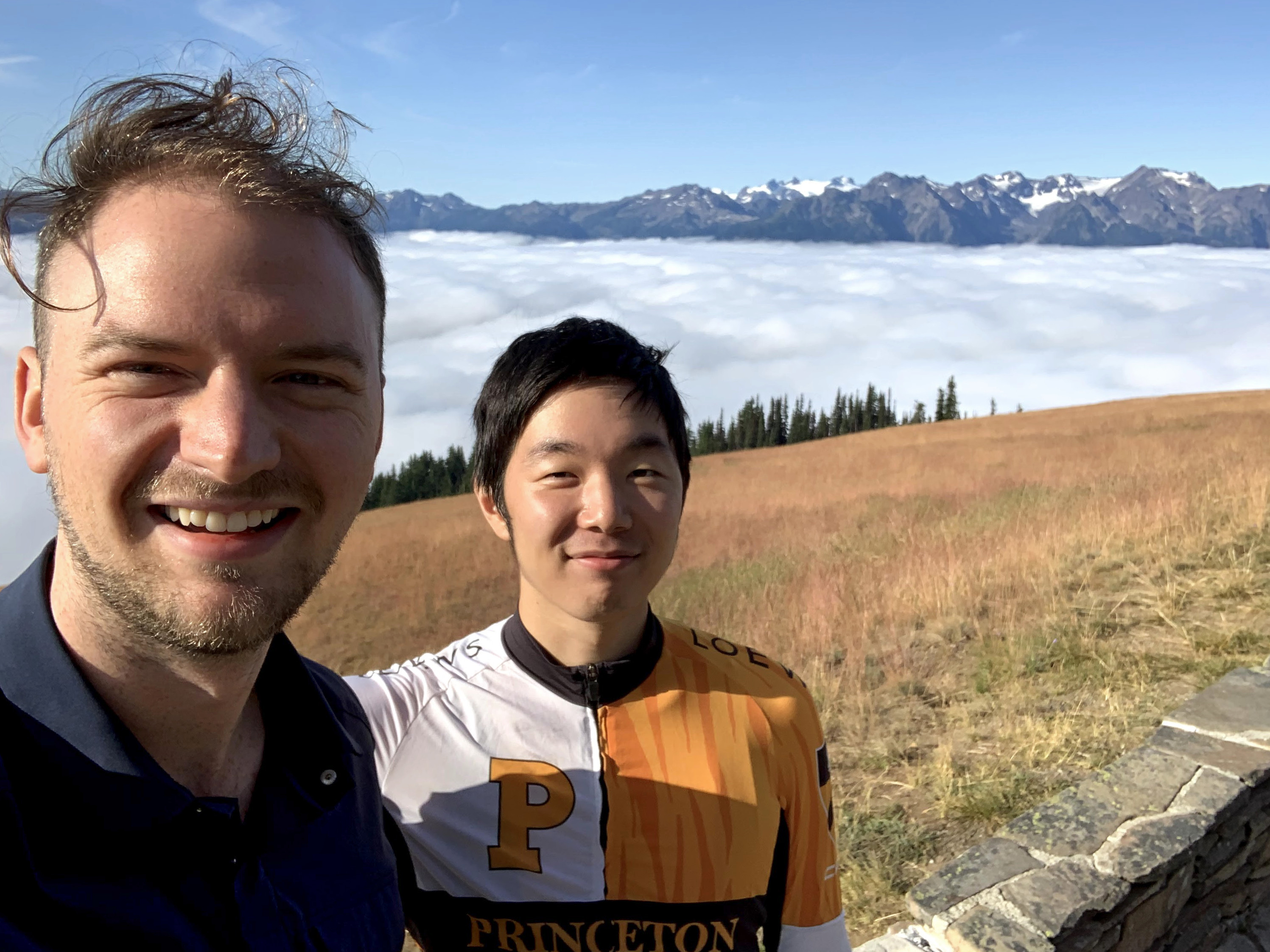
One thing that I was often told as a Princeton undergraduate was that “everybody is a closet superhero” — meaning that everyone there was, in theory, exceptional in their own way. I do not know how true that was in general, but it was certainly true for my three roommates from sophomore year: after getting to know me throughout freshman year (during which I lived in a single), they decided that I needed roommates for my mental health (they were right) and volunteered me into the quad. Our quad in 13 Little Hall was really quite the special place, every day packed full of surprises — I roomed with one extraordinarily patient person, two brilliant software engineers, two world-class musicians with perfect pitch and synaesthesia, three problem-solvers, and three of the best people I have ever met. And on this trip, I would be spending an extended period of time with one of them for the first time since graduating.
Nathan was my ‘direct’ roommate who shared a bedroom with me, so he was no stranger to how immiscible I was with schedules; I think at some point, half of his routine in the morning was trying to get me to get out of bed so I could be productive. I remember him opening the blinds and yelling “Rise and shine, up and at them!” in a doomed attempt to help me be functional. And he was no stranger to travel emergencies, either — Nathan had done an off-road motorcycle tour of Europe during his time in the Netherlands. But as we drove off into the sunset from the ferry towards the campsite, he made it abundantly clear that I would be hearing about my failures to get on airplanes forever, including in his toast if I ever got married.

Nathan and me after successfully catching the ferry
We were worried that the campsite (Elwha Campground) would be closed by the time we got there, but fortunately they were still open for check-in. The campground had spaces for primitive camping, which is what we used, but most of the people there were in RVs, the quintessentially American take on camping. (Note: While I would have preferred to stealth camp somewhere, the people who ran the place were extremely kind and helpful, and I would recommend the campground without hesitation as the starting point for others who might want to do a similar trip.) After grabbing some sandwiches from Port Angeles, we started to unpack our bikes and tents to set up for the night.
It was at this point that I discovered that, to my utter horror, my rear wheel was missing the drive-side hub spacer. (If you’re not familiar with bikes, it’s the bike equivalent of losing a part on your drive axle.) My freehub had fallen off during the transportation, but I was absolutely certain that I had put the spacer back on before throwing the wheel in the car. We looked around in the car to see if we had dropped it, but we couldn’t find it anywhere. Uh oh. I asked a couple who were camping with bikes in the campground next to us if they knew what the part might be, but they just confirmed our suspicion that it was probably hub-specific, meaning that there was no chance that I’d be able to find the correct part.
Our original plan had been to start reasonably early the next day so that we’d have more time for breaks and maybe even go swimming; now we had another crisis of my own manufacture at hand. We considered different options, and decided that we’d go to a bike store in Port Angeles when it opened the next morning and see if they had any parts that we might be able to use to bodge the repair. If they didn’t, I would just rent or buy a rear wheel, and if one wasn’t available, I would either rent a bike or just buy the cheapest BSO (bicycle shaped object; noun: cheap deathtraps that emulate the look of a proper bicycle) I felt safe riding on and do the trip on that. And since we had time in the morning before the shop opened at 10AM, we decided to drive up a mountain road called Hurricane Ridge the next morning.
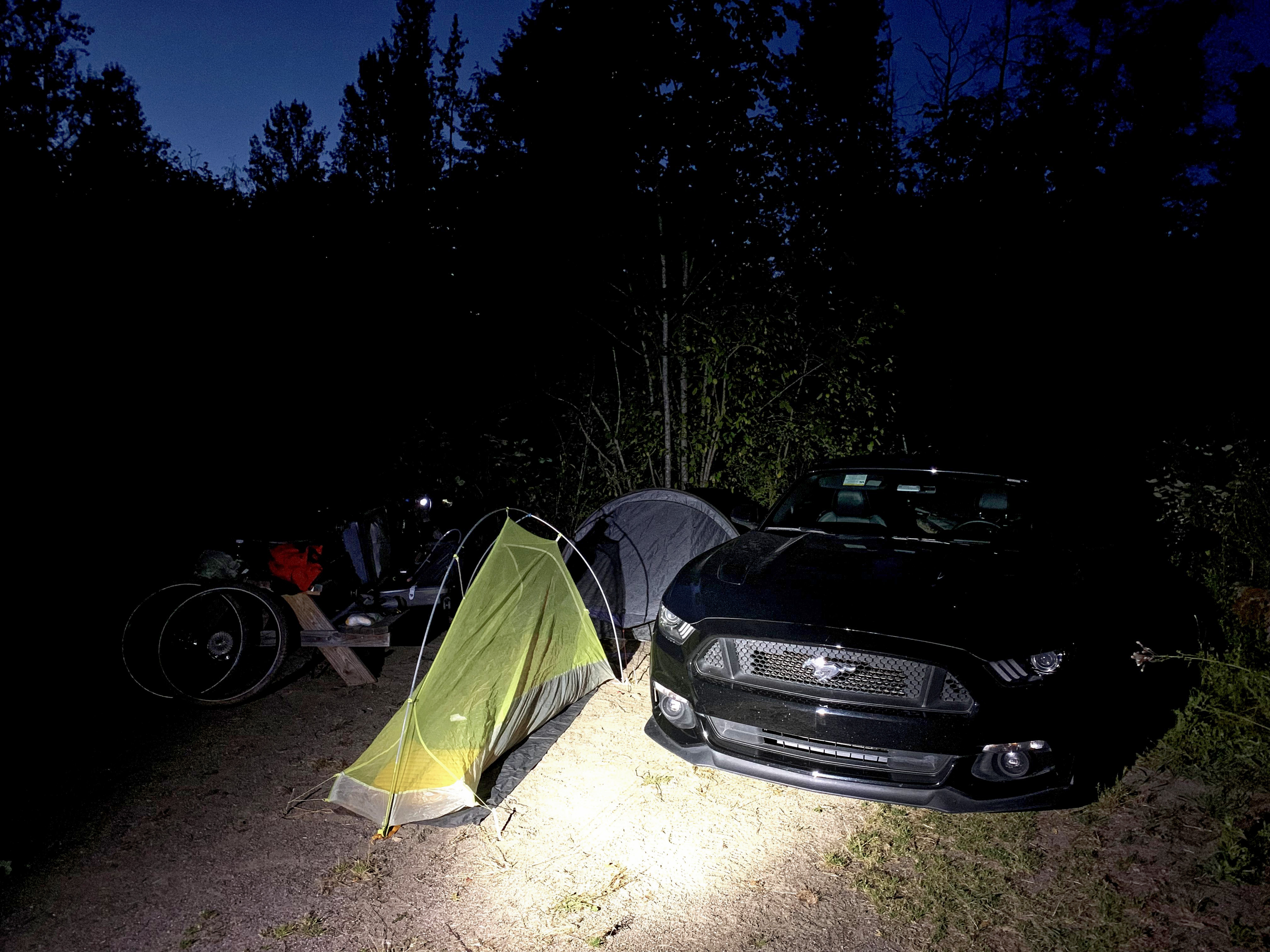
Our little corner of the world for the night
We finished setting up our tents and looked up into the sky, where a thousand stars greeted us like pearls strung across the Milky Way. It was rather surreal, and not just for the stars — for both Nathan and me, it was very odd to see each other outside the contexts that we expected. I was probably the farthest possible person from being “outdoorsy” or “athletic” in my college years, and Nathan hadn’t been too far behind (sorry Nate); and neither of us had seriously gotten into cycling until we’d graduated. People from your past always carry a part of you with them, and it’s not until you meet them again, years down the road, that you realise how far you’ve come. We felt like we were copies of ourselves in some alternate universe.
Day 1 (Part 1): Driving up Hurricane Ridge and fixing the bike
Hors catégorie (beyond categorization, which is where the name of this blog partially comes from) climbs are the hardest climbs in road cycling, initially reserved for climbs that cars were not expected to be able to make. An apocryphal story goes that they would take an old car and try to see what gear the car needed to be in to make the climb: if the car could make the climb in 4th gear, then it was a Category 4 climb and so forth all the way to the 1st gear, until eventually the car would just not be able to make it up the toughest climbs, at which point it would be labelled HC. Even though there isn’t a precise definition in the modern times, the easiest HC climb in the 2019 Tour de France was Col du Galibier, with 1,172m of elevation gain over 23km at an average gradient of 5.1%. (For reference, Washington Road on Princeton’s campus averages 4.5%.) Being from New Jersey, though, it’s not easy to come across HC climbs — the closest one from where I live is a place called Reddish Knob, which is 5 hours away by car in West Virginia. (Here‘s what descending from that looks like, though this is from when I was way slower.) So I was naturally excited when Nathan had mentioned that there was an HC climb named Hurricane Ridge near where we would be going.
However, we were not sure if we’d be able to make it up the climb on Wednesday after we’d had two full days of riding on singletrack and gravel on loaded bikes, and the weather forecast looked rather terrible for that day. (Spoiler alert: It was indeed terrible.) Since we had nothing else to do until the bike shop opened for business, we decided to drive up the mountain and get breakfast. The weather was drizzly and cloudy, and as we started our ascent up the 28km long climb in the car, I carefully started making a mental note of the steep sections — if all went well, we would be doing the same route on our bikes in the rain two days later. By the time we were halfway through our ascent between the evergreens, we had risen above the low clouds and could see faraway ridges veiled in white mists beneath the bluest sky. We also passed a couple of cycle tourers chugging their way uphill on loaded bikes. (We would see them again later.)
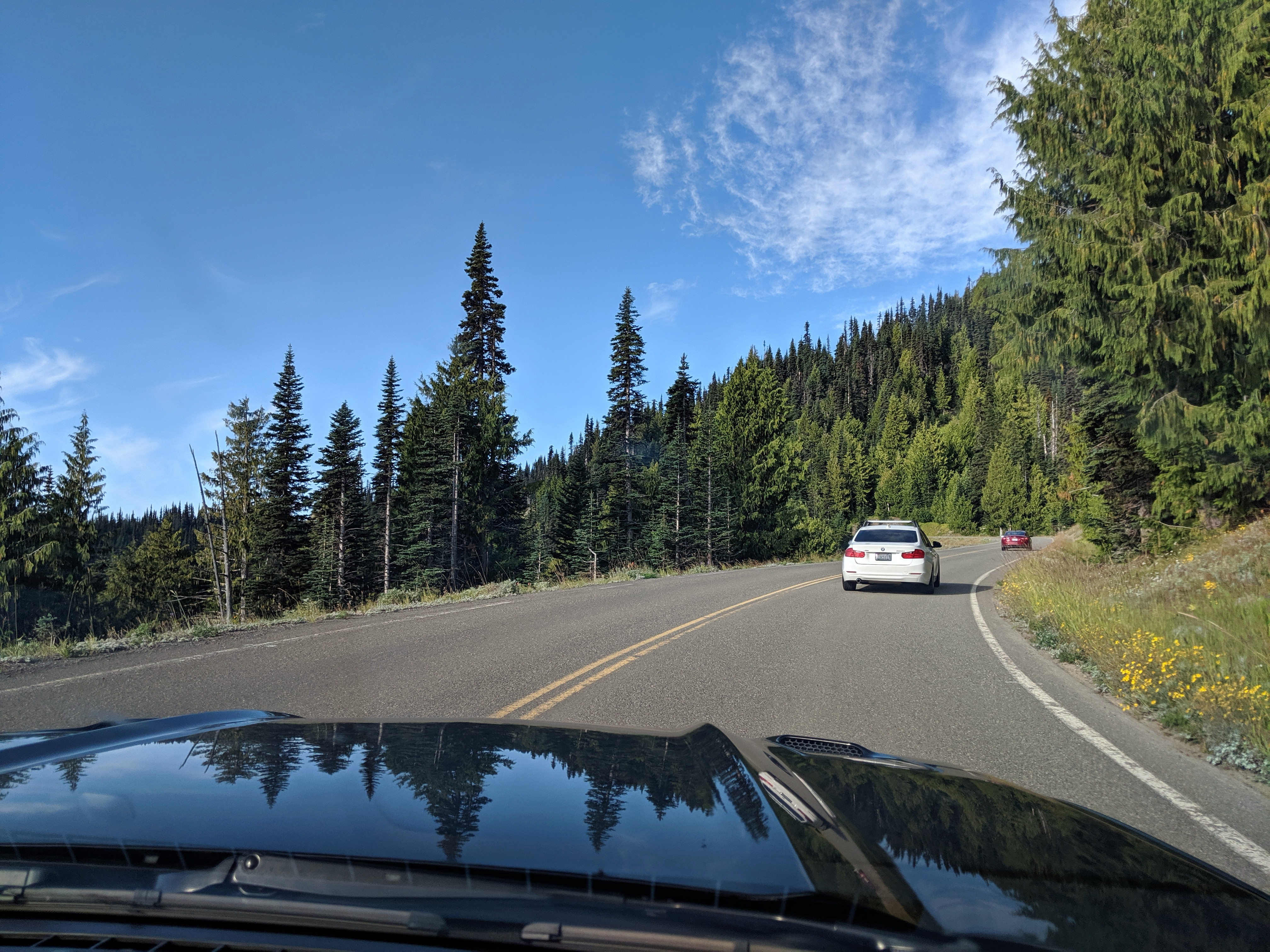
Driving up mountain roads 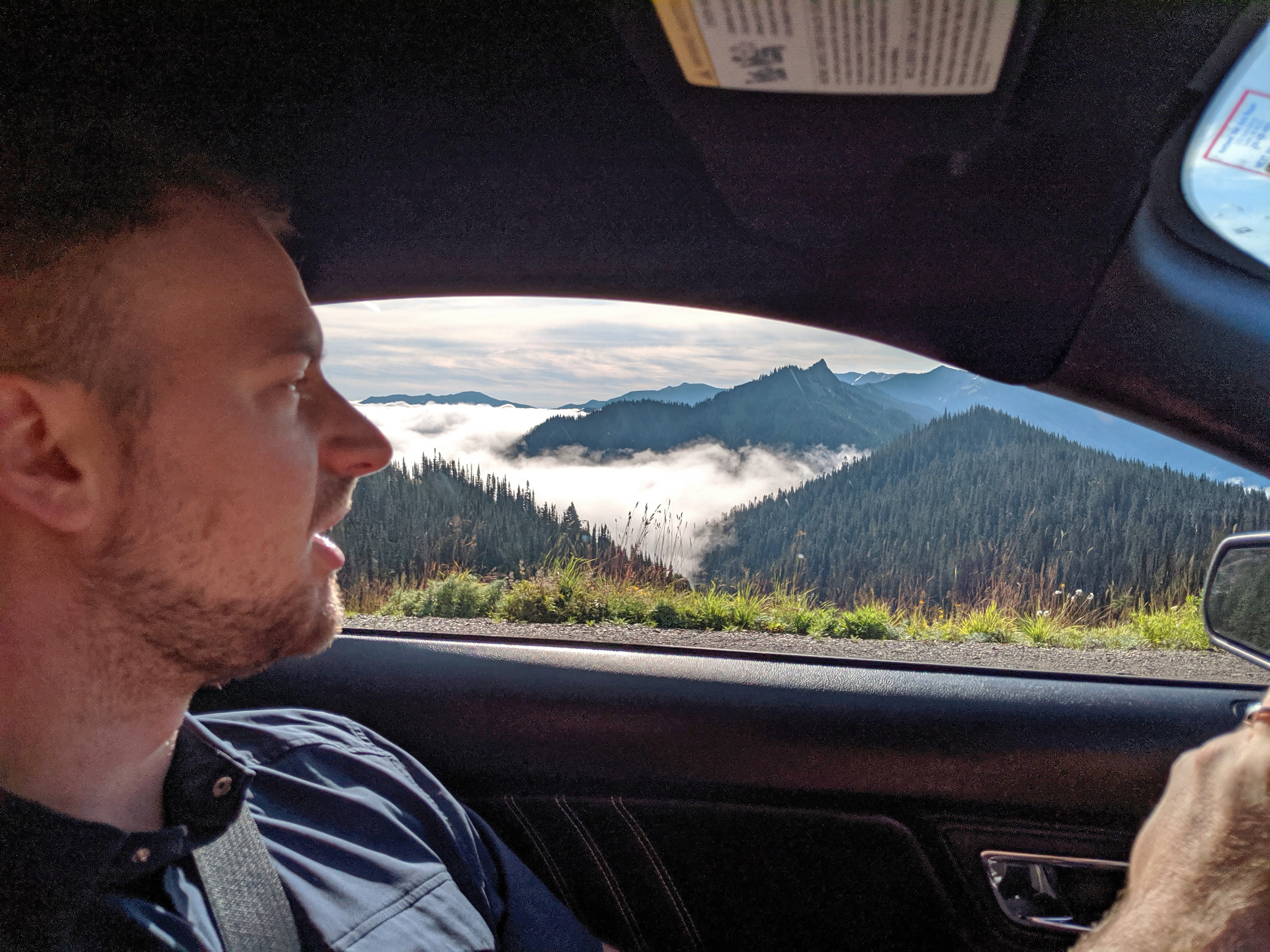
Cloudy day at sea level
As we rounded the corner to the parking lot at the top, we were treated to the most incredible sight — the valley below us was filled with clouds, and snow-covered mountain peaks towered above them on the other side on a ridge that extended left and right as far as the eye could see. It was as if we were seeing a mountaintop lake, filled with clouds instead of water.
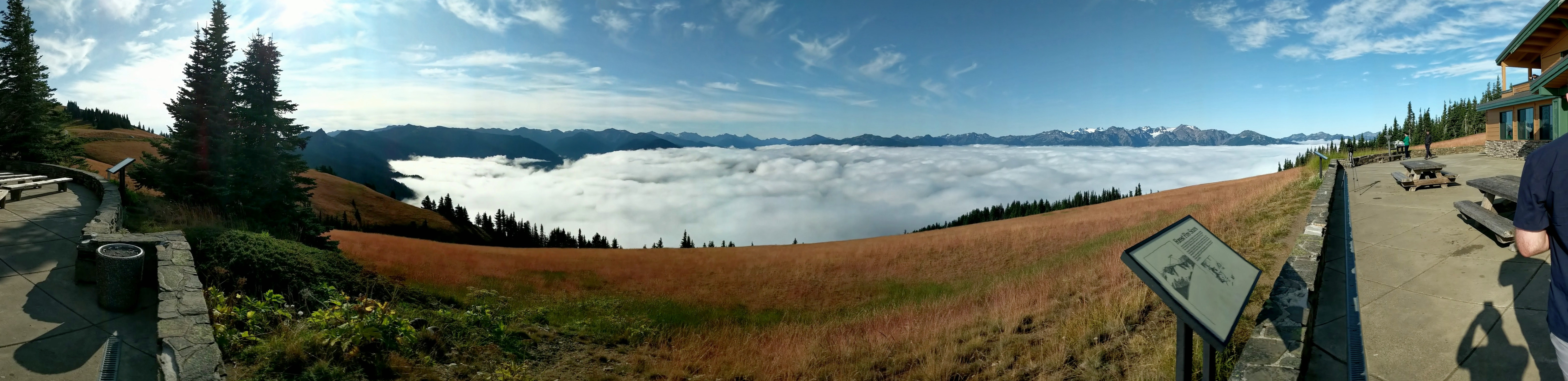
I take blurry panoramas of things – click to see full resolution
“I’ve been up here many times but I’ve never seen it like this,” Nathan said. Naturally, I told him “See, aren’t you glad that I suck at planning?” to which he begrudgingly agreed.
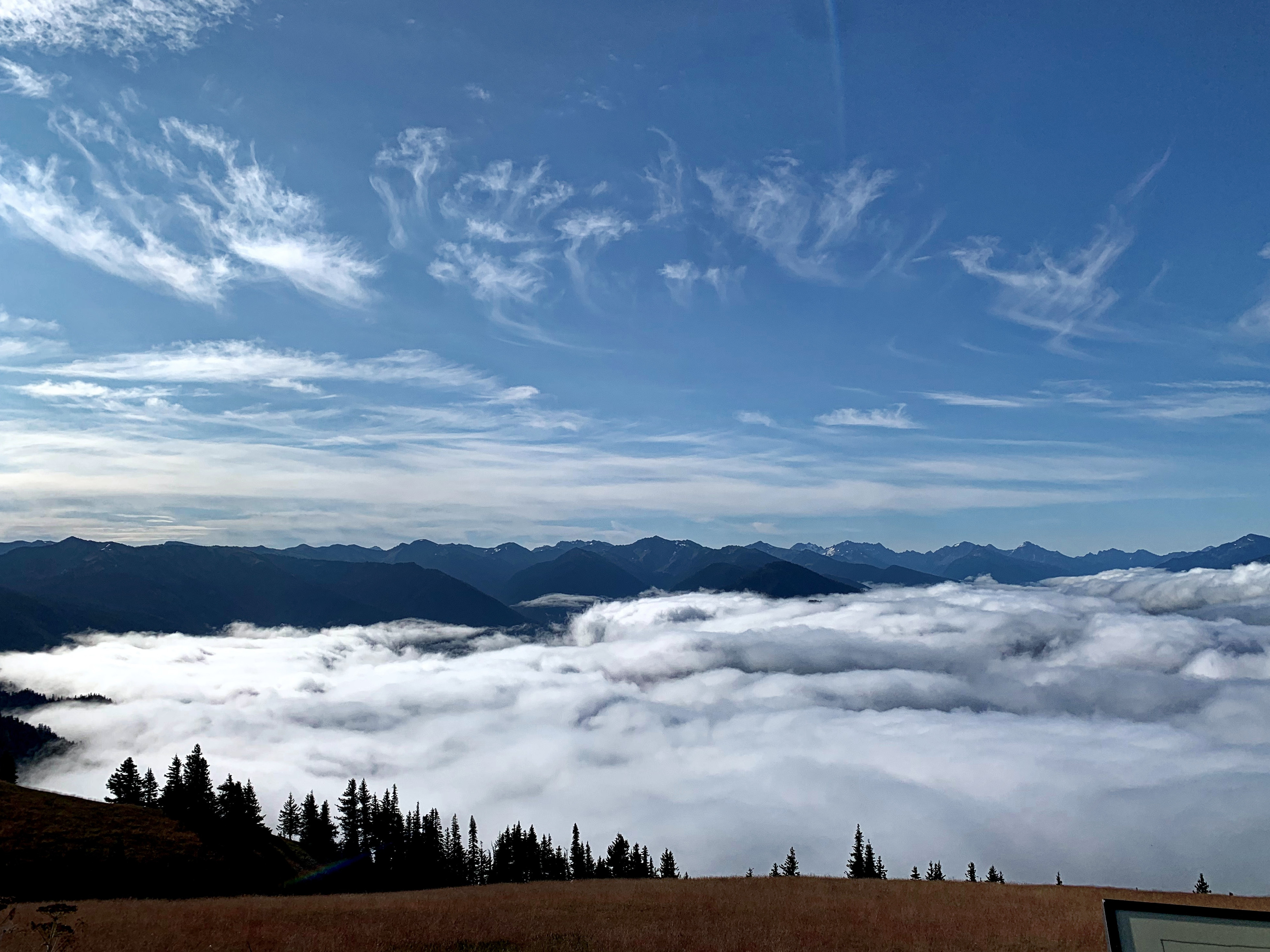
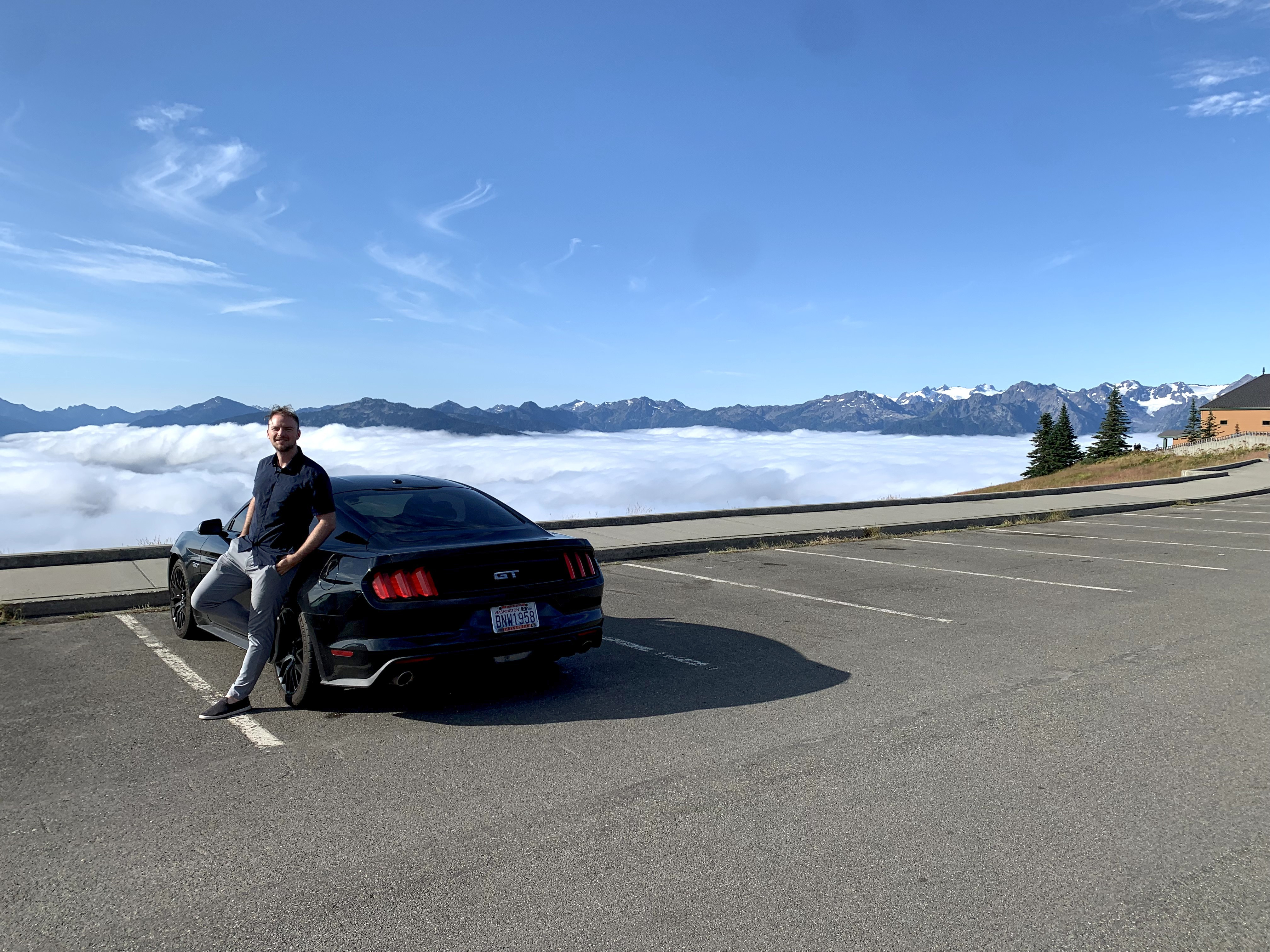
We took in the view, took a few glamour shots of Nathan’s Mustang, and then made our way downhill, but not before a lady came up to me and asked me with incredulity whether I seriously had biked up the mountain. (I was already in my cycling kit.) This stung my pride: I had worn a cycling jersey and bib shorts while being driven up a mountain in a V8. Now I knew I had to climb up this mountain on Wednesday, do or die.
Back in Port Angeles, we had a big breakfast (the chocolate macaroon shake was delicious) and then headed to the bike store. As expected, the shop did not have the exact part that we needed, but they did have generic DT Swiss hub spacers. After I tried fitting them, I noticed that it was a few millimetres too short and my cassette was rubbing against the frame, so we returned to the store, where the shopkeeper managed to find some generic washers so that I could push the spacer out. After a few attempts trying to get the distance just right, we finally managed to get it to fit perfectly. (A huge thank you to Sound Bikes & Kayaks for taking my rear cassette off and putting it back on ten or so times until we got it right!)
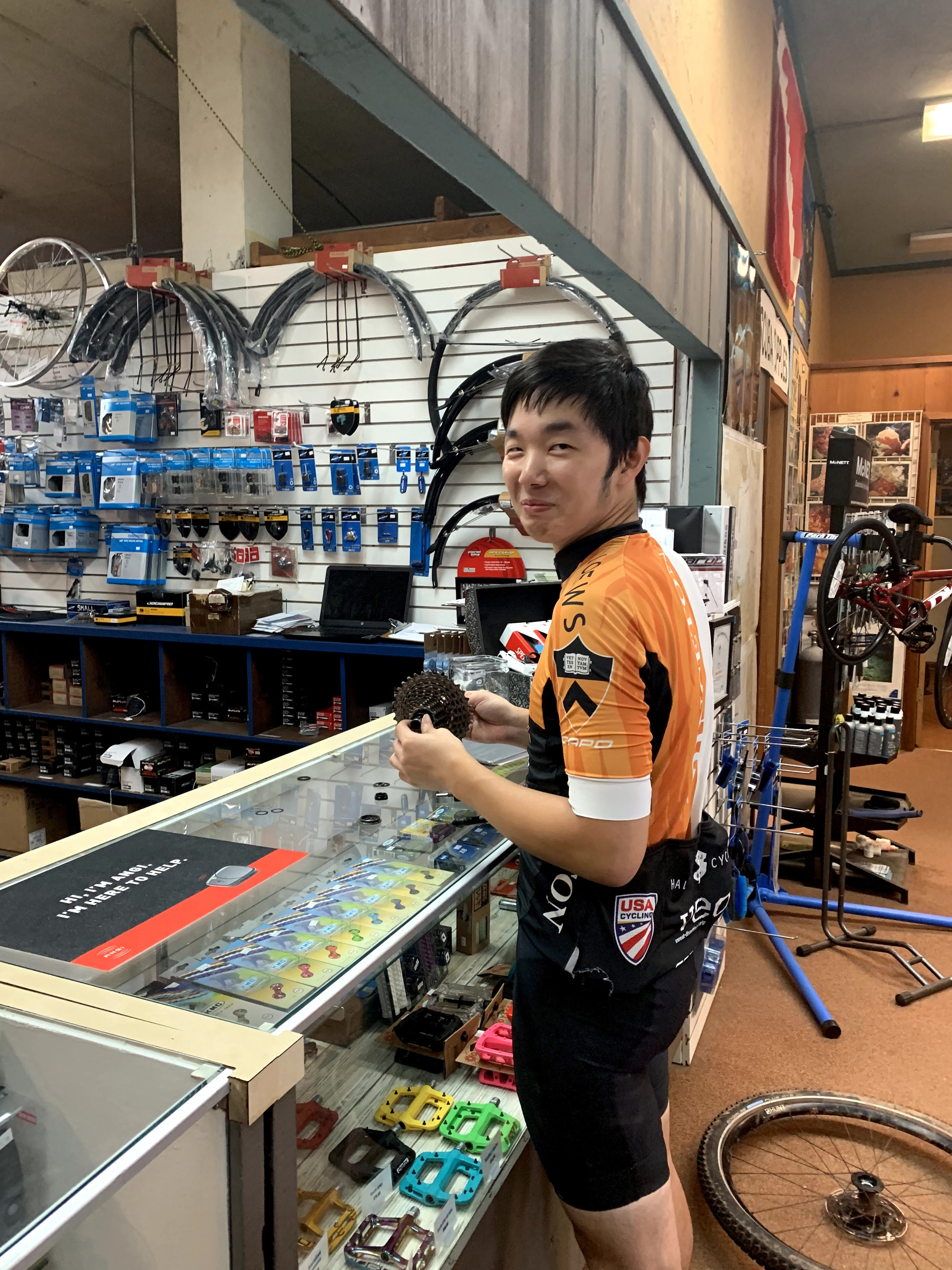
This is the sheepish smile of a man who’s happy to solve a problem that should never have existed in the first place 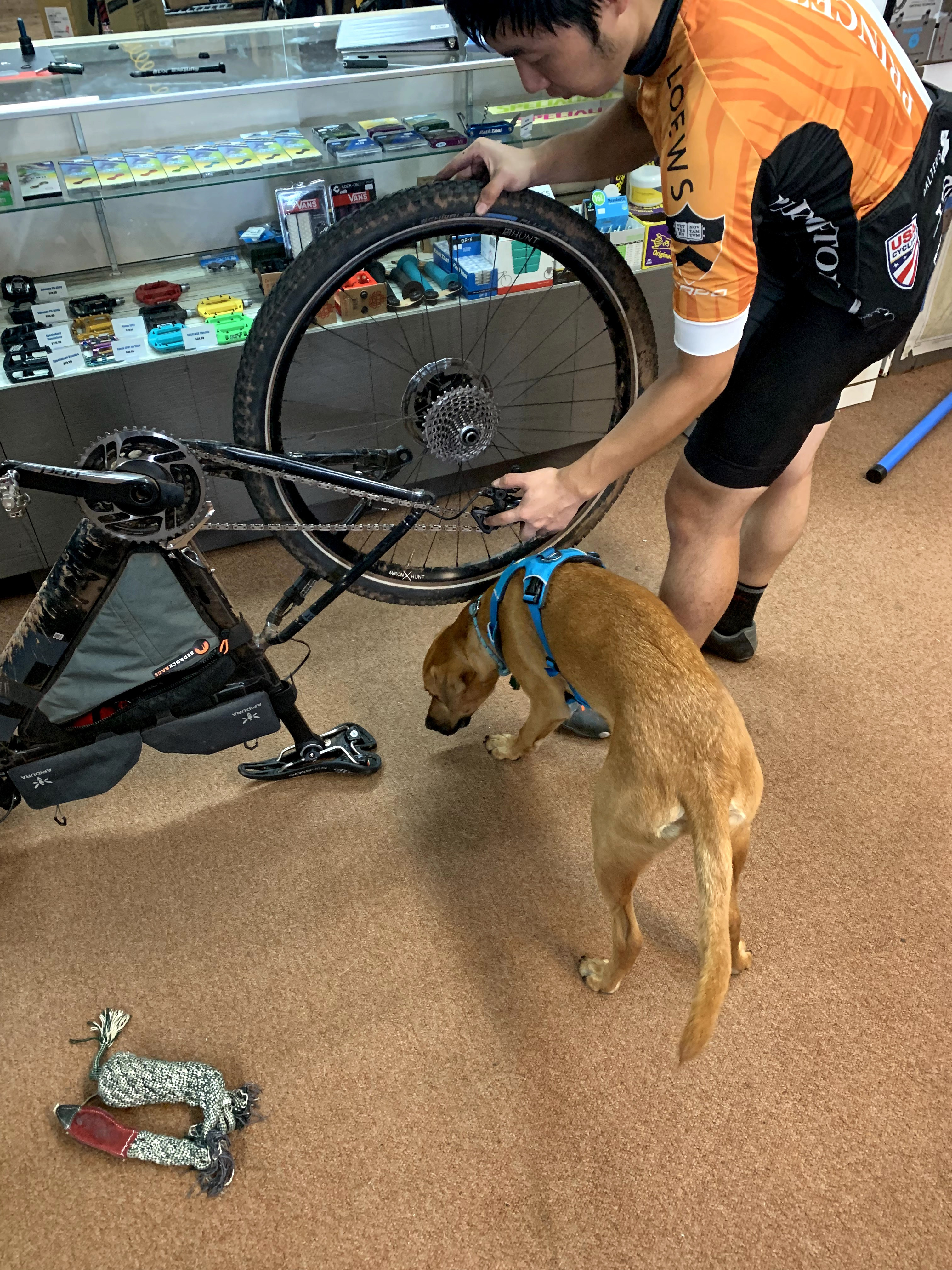
Trying out different washers to get to that magical 142mm mark
With my bike finally ready, we returned to the campsite and started setting up our bikes with bags. Part of my motivation for this trip was testing my gear in a real-life scenario, so I wanted to carry most of what I would be using on my around-the-world trip. I was carrying about 120 things distributed across my handlebar bag, handlebar accessory bag, frame bag, saddlepack, feed bags, top tube bags, and my backpack. Nathan opted for a simpler setup on his Salsa Cutthroat, using two drybags on the fork each containing a sleeping bag and a bivvy bag, a frame bag, top tube bag, and a regular saddlebag. I volunteered to carry some of Nathan’s gear including his stove / pot and the bear spray, in addition to most of the food; I needed to practice riding with weight, and had space in my bags from not carrying a packraft.
After a brief scare when we thought that I might have lost the other rear hub spacer (this is also when the missing rear hub spacer finally showed up in the car, but I decided to just use the hacked-together solution from the bike shop since I was too proud of the hack), we were almost ready to finally start pedalling, 48 hours after I’d left home. We agreed on the course of action if we ended up getting stranded without food (“Nathan, we’re eating you first.”), filled up on water, and set off on our way onto the Olympic Discovery Trail Adventure Route.

All loaded up and ready to go
continued in Part 2…
 Beyond Categorization
One thought